
From zero-emission beauty refills to gin delivered on foot, Anna Fielding meets the businesses tackling London’s transport pollution
“The point of starting our own company was to do things the right way, even if it felt that ran counter to what the rest of the industry was doing,” says Sophie Slater, co-founder of cult ethical fashion label Birdsong. “We knew that having environmentally friendly transport had to be part of that.”
The majority of Birdsong’s clothes are manufactured by women in Tower Hamlets who have otherwise faced barriers to finding employment. With its design studio in Dalston and its warehouse in Camden, the clothing company is rooted in London, something Slater says has been central to its ability to keep transport emissions low.
“If we need to take patterns or samples between the studio and the factory, or check in on the warehouse, one of our team will do that either on their bike or on public transport,” she says. “Likewise, when deliveries are ready to head out we ensure they go in a Royal Mail van at the same time as goods from other brands we share warehouse space with to cut down on the number of journeys.”
 Birdsong founders Susanna Wen (left) and Sophie Slater Rachel Manns
Birdsong also offers local Camden pick-up to customers who want to collect their purchases themselves, plus they host studio open days which allow people to purchase products and take them home there and then.
Read More
“Having a sustainable transport approach is more thought and more expense for us but we get it back in consumer trust,” says Slater. “People know we’re not greenwashing.”
Birdsong is part of a growing movement of London businesses developing greener transport strategies. Never has the need been more pressing. Road transport was responsible for more than a third of UK greenhouse gas emissions in 2019, the highest single source of carbon emissions. And despite attempts to instigate systemic reductions in polluting vehicles on London’s roads, motor vehicle miles in the capital have only reduced by three per cent since the early 1990s.
Faced with rising fuel prices and the recent expansion of the Ultra Low Emission Zone, there are more incentives than ever for London-based businesses to explore transport options beyond petrol and diesel-powered cars and vans.
For Rich Mason, founder of bicycle-based takeaway delivery service Wings, the choice was straightforward.
“Delivering takeaways like this should be an obvious thing to do,” he says. “We’re at a point in time where we need to do whatever we can to reduce our emissions and using a bike over short distances should be one of the easiest.”
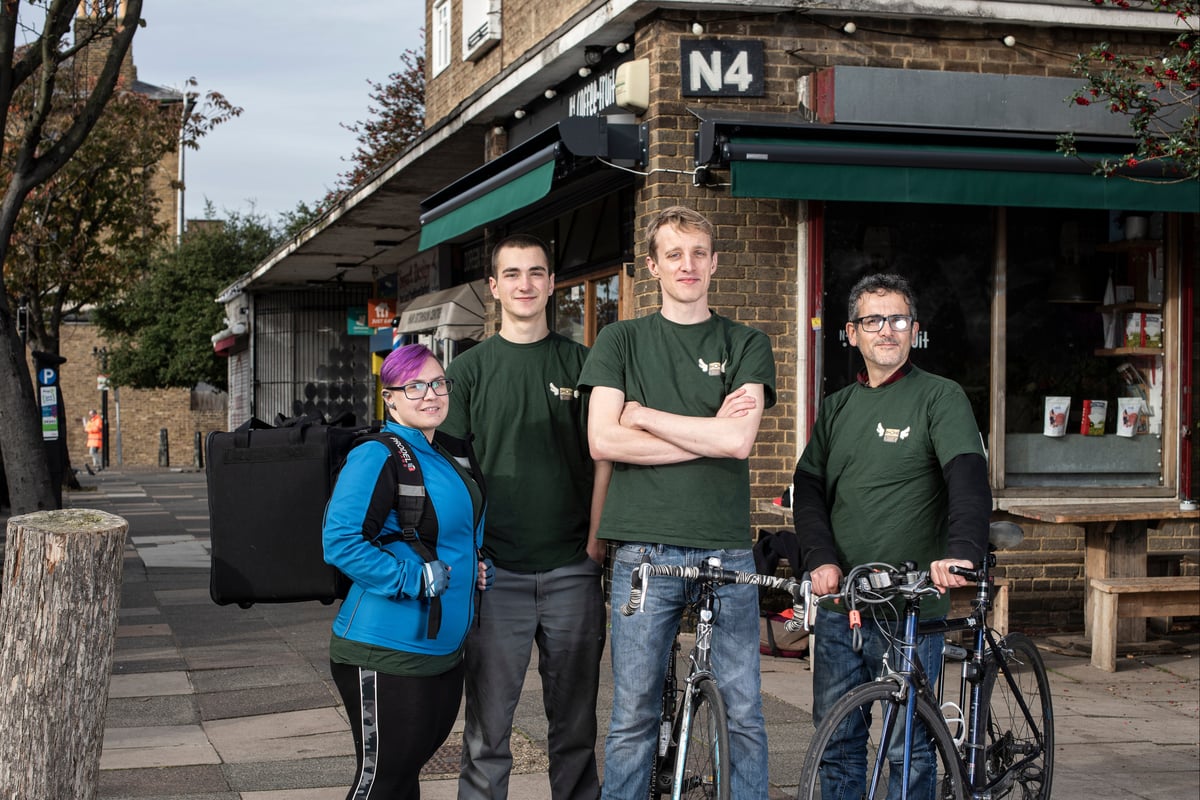
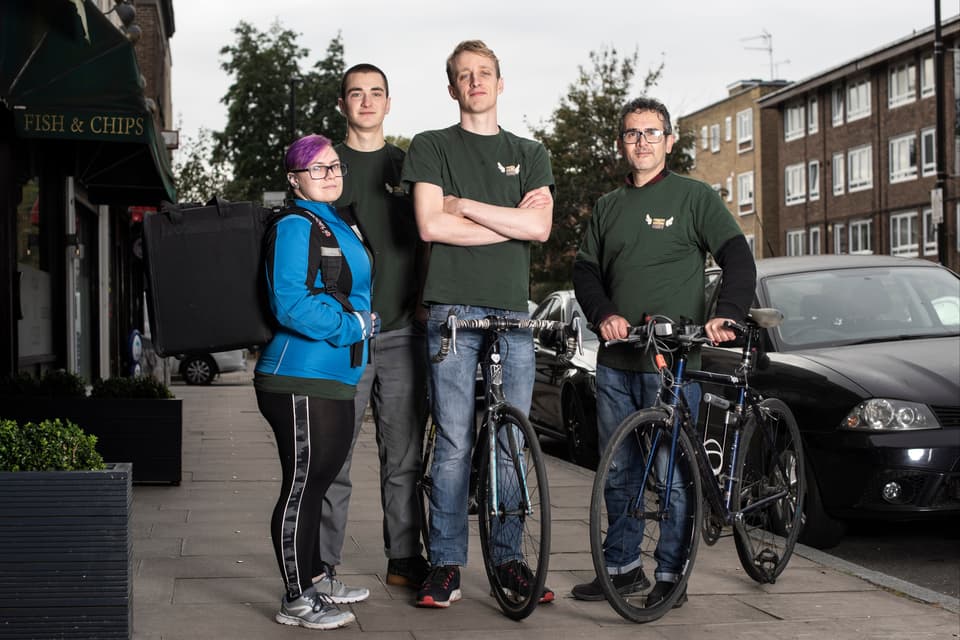 Wings founder Rich Mason (2nd right) with members Kirstie Summers (left), Ben Jacob and Faycal Ariouat (right).Daniel Hambury/Stella Pictures Ltd
According to the former Deliveroo rider, the mainstream gig economy that dominates London’s food delivery sector doesn’t just support but in fact directly encourages the adoption of less sustainable transport options.
“You’re classed as an independent contractor,” says Mason. “But you can’t structure your time in the way you would if you were genuinely freelance. You have 30 seconds to accept a job, and then when there’s no work you earn no money.” This often leads, he says, to riders abandoning their bicycles for mopeds to fulfil more orders and earn more when orders do come in.
Wings, however, functions as a workers’ co-op and pays riders the London living wage. Finsbury Park residents can order their takeaways from local restaurants through the Wings website from Wednesdays to Saturdays and Wings ensures the delivery is no more expensive than using another service. “As a business, it is harder to do it this way,” says Mason. “But it’s also more rewarding and it’s really how things should be going.”
Like Wings, Fulham-based business Circla also provides a doorstep delivery service, although in this instance of high-end beauty products across south-west London.
“I’ve always been a beauty junkie but I just couldn’t justify the waste any more,” says founder Claudia Gwinnutt. Instead, Circla buys products from a range of ethical premium brands which arrive in “big, unglamorous tubs”. The company decants the products into Circla packaging and sends them out, collecting any empties in the process before sterilising and re-using them.
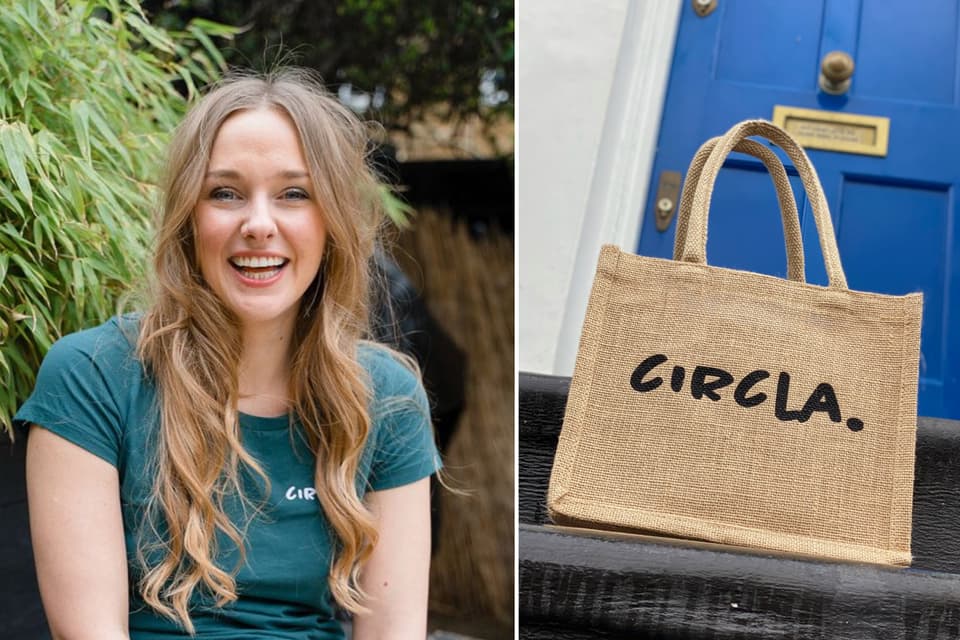 Claudia Gwinnutt, founder of Circla Claudia Gwinnutt
Gwinnutt considers sustainable transport an integral part of her business, the majority of which is delivered by a cycle courier company, although some deliveries are also made using an electric car.
“It would be absolutely hypocritical for us to place so much emphasis on packaging and then not follow through in other areas like transport,” she says.
Doing the right environmental thing often has strong community benefits, says Deborah Efemini, the creator of two south London drinks brands including Catford Gin, which is infused with the herb catnip.
Its hyper-localism isn’t confined to its name. The gin is made in Catford and customers pre-order for when a batch is ready, reducing the number of deliveries by grouping them together. Homesick Catfordites living elsewhere in the UK and abroad will receive a standard postal delivery. But given the vast majority of Efemini’s business is in SE6, some packages are taken by Hugo Harrison, who runs a local cargo bike delivery service, and most are hand-delivered by Efemini on foot.
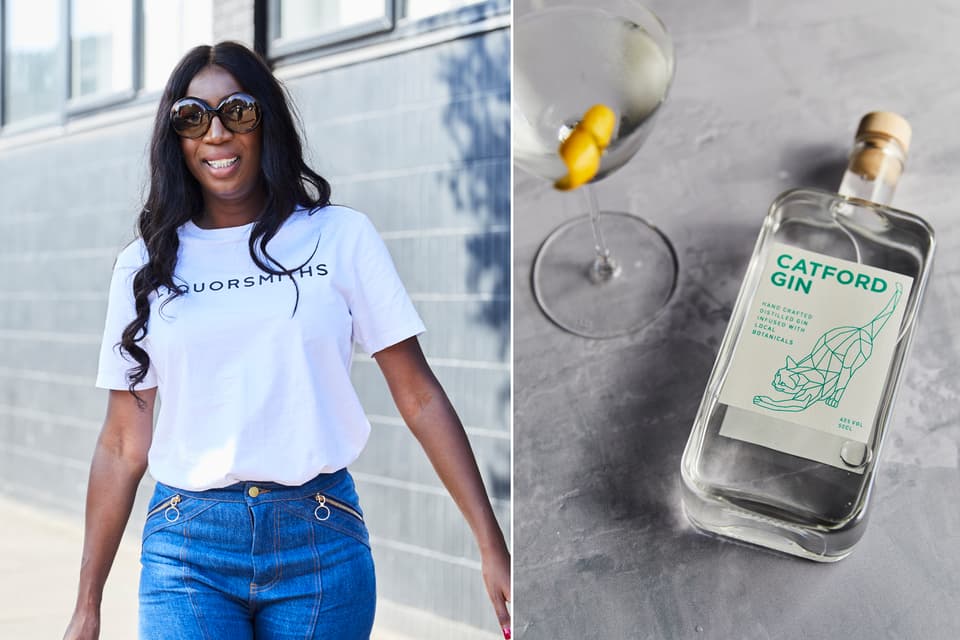 Deborah Efemini and her Catford GinMilly Fletcher
As a regeneration specialist who works with the local council, community is important to her. “It’s emotionally sustainable too,” she says. “There’s a real benefit to being able to chat to people and know regular customers.”
Of course, hand delivery isn’t possible for everything. For a real taste of the future, look to Wembley-based Magway. The company is developing a system whereby driverless electro-magnetic carts run through a network of utility pipes above or below ground, allowing for near-constant small-batch delivery.
“We’re three to five years away from launching the first multi-user routes,” says co-founder Phill Davies. “We’re aiming to reduce the amount of vehicles on the streets. It’s about reducing emissions, but also the amount of particulate matter that comes from tyres grinding on streets.
“There is an urgent need for sustainable deliveries to create supply chain resilience. If we are ambitious, together we can crack climate change.”
Sustainability training for your business
Learn how being more sustainable can help you grow your business. The training is developed by Google, in partnership with Planet Mark, as part of the UK Government’s Together for Our Planet campaign. Register for free at g.co/sustainability/uk