
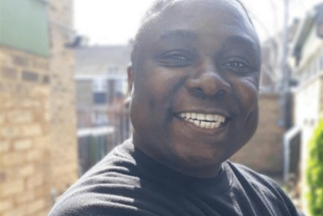
The use of “excessive” force by security guards at the ExCel Centre in restraining a black man having a mental health crisis contributed to his death, an inquest has found.
Jason Lennon, 37, had been experiencing an acute psychotic episode around 7.30am on July 31, 2019, when security guards at the east London venue brought him to the ground and restrained him in the prone position for about five minutes.
When police arrived on scene, they found him, and he was pronounced dead at Newham General Hospital two hours later.
Read More
An inquest into Mr Lennon’s death at Walthamstow Coroner’s Court on Friday criticised the SIA-licensed security firm, Secure-Ops, and mental health services responsible for his care in east London.
It concluded security guards used excessive force in the restraint, failed to respond to the fact he was unresponsive, and that no-one checked his vital signs.
In a narrative conclusion, the jury said: “Although the degree of force used to bring Jason to the ground was appropriate in the circumstance, the manner in which Jason was restrained on the ground was unreasonable.
“The degree of force used to maintain the restraint on the ground [was] excessive, as Jason was restrained in the prone position.”
Although security guards had told the inquest that Mr Lennon, described as “smiling, gentle and kind” by his mother Vevine, was communicating when handed over to police, the jury found he suffered a cardiac arrest during the restraint.
The jury added: “The manner in which Jason was restrained… was not endorsed by SIA training as there was an imminent risk of positional asphyxia [when breathing is inhibited]”.
Mr Lennon, who was born and raised in Jamaica, was living in supported accommodation at the time of his death, and under the care of East London NHS Foundation Trust mental health services.
The jury concluded that a number of failings in his care caused or contributed to his death, including inadequate management and risk assessment and missed opportunities for improved care.
They found the communication with Jason’s supportive living provider was ineffective, and his care was not discussed at multi-disciplinary meetings as it should have been.
The 37-year-old had suffered a brain injury in September 2022 and was later treated for a schizophrenic illness, which required inpatient care five times in the five years before his death.
His mother, Vevine, said: “Jason was a loving and thoughtful son. Everyone who knew him described him as smiling, gentle and kind.
“The mental health teams should have done better and we are heartbroken to have lost Jason in such a violent and shocking way as a result – we pray this doesn’t happen to anyone else. His daughter Dejeanne and I miss Jason terribly.”
Lucy Mckay, spokesperson for the charity INQUEST which supported the family, said: “Security guards clearly have a role in initially responding to incidents like this.
“They must be adequately equipped and able to do so safely and effectively, without putting lives at risk.”
There have been four inquests in the past year in which restraint by security staff has been criticised and found to contribute to a death, she said.