
Airlines from Canada and the United States, led by Sir Richard Branson's Virgin Atlantic, have challenged the UK government's economic case for a third runway at Heathrow.
Virgin Atlantic challenges Heathrow expansion
Virgin Atlantic and other airlines have torn apart the Government's economic case for a third runway at Heathrow.
They shredded the Labour Government's blueprint for expanding the west London airport which was fast‑tracked as then Chancellor Rachel Reeves was scrambling to boost economic growth in Britain.
They argued that the cost of a third runway could spiral with passengers and airlines bearing the cost of the expansion, which London Mayor Sir Sadiq Khan has warned could lead to more than 150 extra night flights a day.
Potential impact on North American carriers
Heathrow serves as a key gateway for flights between North America and Europe, handling many Canadian and US carriers such as Air Canada and United Airlines. Any increase in airport charges could be passed on to passengers on those routes, potentially raising ticket prices for travelers between Canada, the United States and the UK.
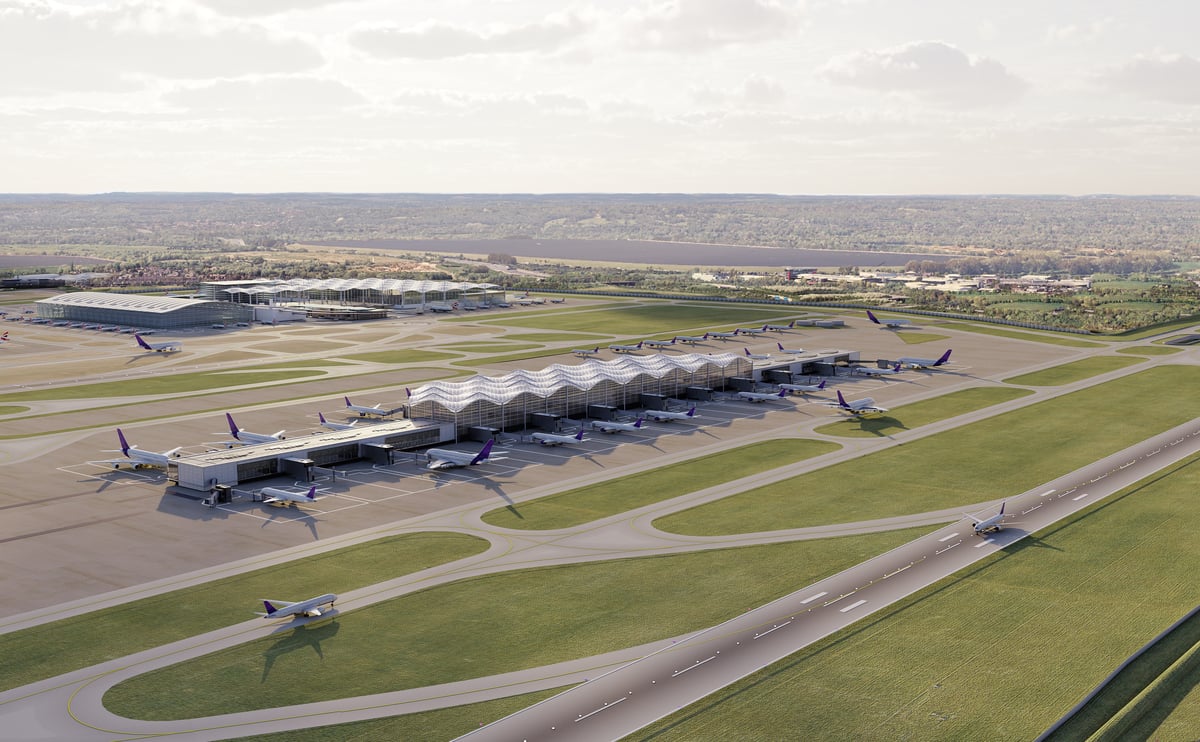
Heathrow wants another runway to increase capacity to 756,000 flights and 150 million passengers a year.
Virgin Atlantic raised the prospect that the final bill for expanding Heathrow could be so high that it is "no longer economically viable for airlines to use".
Airlines are calling on the Government to impose a fifth test, on the development's affordability, alongside the existing four on its impact on climate change, noise, air quality and economic growth.
The huge questions about the Government's proposals were laid out in a series of damning submissions to the Commons Transport Committee's inquiry into Heathrow expansion.
Virgin Atlantic stressed: "Government support for expansion is predicated on the delivery of economic and consumer benefits. However, the benefits case is insufficiently robust, predicated on a flawed assumption that airlines can reduce fares significantly while passenger charges increase sharply."
It emphasised that the estimated £33 billion cost of a third runway, rising to £49 billion once terminal area improvements and other investment are included, would be the "world's most expensive airport scheme ever constructed".
Transport Secretary Heidi Alexander sought to make the case for a bigger airport in west London in the draft Heathrow Expansion National Policy Statement (HENPS) published in June.
The International Airlines Group, parent company of British Airways, delivered a scathing response to the document and called for the total costs of the third runway scheme to be capped at £30 billion.
British Airways said: "Heathrow is already the most expensive airport in the world for airlines to use, and expansion risks driving charges up to the point where the hub becomes unaffordable."
IAG stressed that at a cost of £49 billion there were "serious questions about whether the plan represents value for money or even a reliable basis for decision making".
It added: "Independent analysis suggests Heathrow's cost evidence is selective, inconsistent and not robust enough to underpin such a major national commitment."
The London (Heathrow) Airline Consultative Committee and the Airlines Operators Committee, which represents over 90 airlines, ground handlers and others operating at Heathrow, warned of the risk that the third runway scheme becomes a "blank cheque" to be paid by passengers and airlines.
They stressed: "As currently drafted, the draft HENPS does not provide a sufficiently robust framework to ensure that expansion is affordable, deliverable and capable of producing the economic benefits envisioned by the Government."
In a series of criticisms, they said that Department for Transport modelling tools "overstate the resilience of demand to higher charges".
Heathrow's economic plan for the new runway was a "high risk critical path" partly due to having to divert the M25 at a cost of £1.5 billion, they added.
Heathrow Airport argued that expansion will "improve punctuality, reduce congestion and enhance the passenger experience", while increasing airline competition and "potentially saving" passengers £79 billion through lower fares over the next three decades.
A spokesperson said: "We have airlines queuing up to offer passengers more choice, and businesses and trade unions across the UK are ready and waiting for the chance to start building.
We've seen plenty of inaccurate claims about costs, but the CAA (Civil Aviation Authority) has reviewed and said our projections are credible."
It believes the Government's modelling "significantly undervalues the economic benefits" of expansion.
A Department for Transport spokesperson said: "We want any Heathrow expansion to work for passengers, airlines and the wider economy. That's why our consultation sets out how affordability will be assessed and seeks views before any final decisions are made."
The DfT stressed there was independent analysis showing expansion could add up to £2.6 billion to the UK economy in 2056.
But Rob Barnstone, co‑ordinator of the No 3rd Runway Coalition, said: "The airlines have demolished the economic case for a third runway."