

Allow Exco Player content
This content is provided by Exco Player and may use cookies or similar technologies. Please click 'Allow and Continue' below to load the content.
A “very high” pollen alert has been issued for London as the capital basks in unseasonably warm weather.
Londoners enjoyed a welcome taste of spring yesterday, offering relief after 55 days of cold, wet and windy conditions earlier in the year.
Temperatures climbed to 19C by lunchtime, according to the Met Office, making the capital warmer than several Mediterranean hotspots, including Malaga and Barcelona.
But while many are soaking up the sunshine, the sudden rise in temperatures brings challenges of its own, particularly for allergy sufferers.
File ImagePA ArchiveAccording to Kleenex’s pollen tracker, London is currently experiencing “very high” levels of tree pollen, while levels are "high" in areas including Birmingham and Manchester.
The shift from a long, cold and wet winter to relatively dry and mild conditions has caused a “pollen bomb” as trees have released their pollen in a surge.
Cypress is currently the key culprit in causing allergic reactions in London, with 226ppm, followed by Alder with 79ppm.
Around 25% of the 13 million hay fever sufferers in the UK are allergic to tree pollen, which equates to around 3.25 million people.
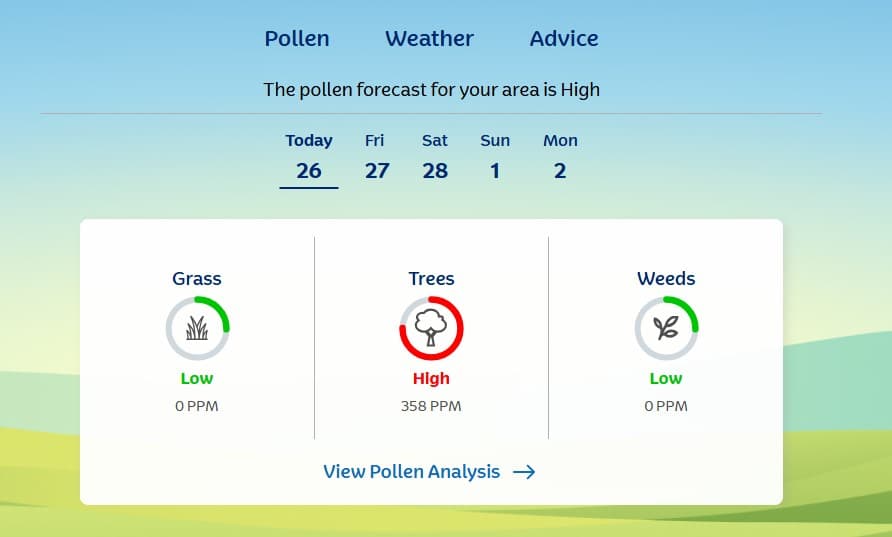 Kleenex’s pollen tracker Kleenex
Hay fever is a common allergy to pollen that can cause a number of miserable symptoms for sufferers, including sneezing, a runny or blocked nose and itchy, watery or red eyes.
It occurs when the immune system overreacts to allergens in the air, and as well as pollen, it can be triggered by house dust mites, mould spores and pet dander.
Experts attribute this early surge of hay fever to climate change, which is creating milder winters and causing trees to bloom earlier than the traditional March start for the season.
Read More
Temperatures in London are predicted to remain mild for the rest of this week at around 12 to 13C.