
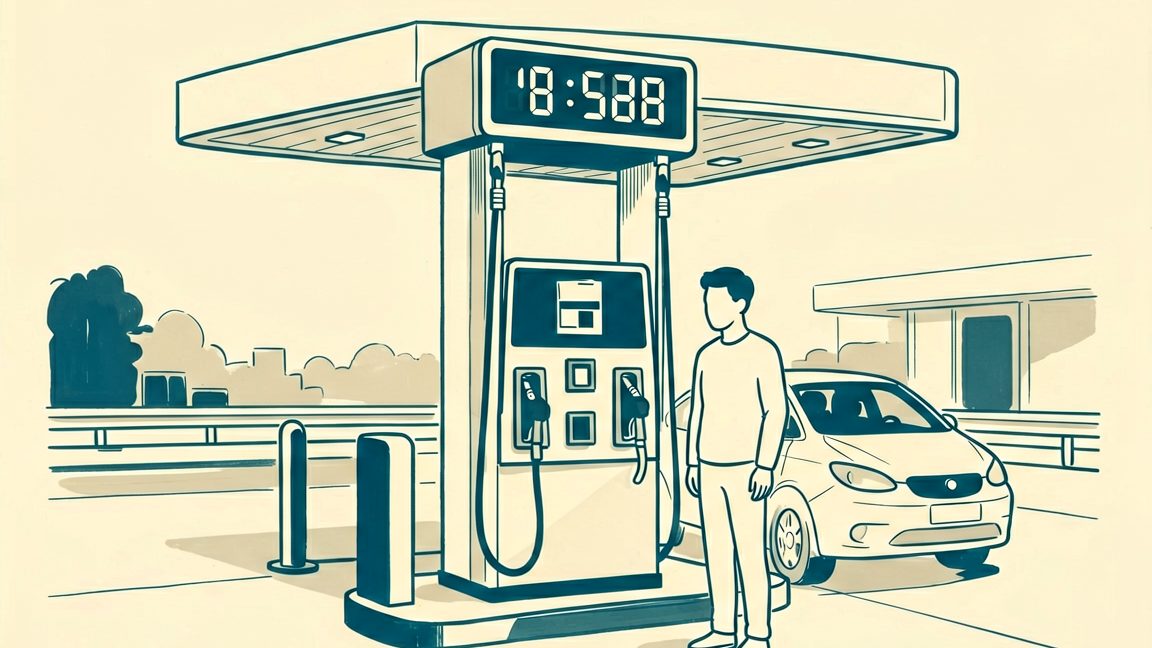
Hundreds of thousands of drivers will be on UK roads in the final week of summer, a period when fuel and parking costs can quickly add up. In response, the Department for Transport (DfT) published new consumer advice on 25 August 2026 urging motorists to use fuel‑price comparison apps and to avoid filling up at motorway service stations during the peak travel week.
What the DfT is telling drivers
The guidance, titled “5 ways drivers can save money and avoid costly mistakes as summer travel peaks”, spells out two concrete actions. First, it points out that fuel prices can vary significantly between nearby petrol stations and that apps and websites – using Fuel Finder data – can locate the cheapest petrol and diesel before a driver fills up. Second, it advises drivers not to wait until they are on the motorway to refuel, because service‑area fuel is often more expensive than stations off the motorway.
Why motorway pumps cost more
Motorway service areas are typically located on land owned by private operators who charge higher margins to cover the cost of maintaining facilities that are open 24 hours a day and provide a range of ancillary services. The DfT’s advice notes that “motorway service area fuel tends to be pricier; avoid filling up there during busy travel periods.” This observation aligns with long‑standing consumer experience that the convenience of a service‑area pump carries a price premium.
How much can drivers save?
The DfT does not publish a precise figure for the potential savings, but the advice is based on the premise that price differentials between stations can be “significant”. By using a price‑comparison app, a driver can identify a station that is a few pence per litre cheaper. Over a typical fill‑up of 50 litres, a 3‑pence‑per‑litre difference translates into a £1.50 saving – a modest but tangible amount when multiplied across the hundreds of thousands of motorists travelling that week.
Who is behind the advice?
The guidance is authored by consumer‑expert Emma Cochrane, who is quoted in the DfT release: “Consumer expert Emma Cochrane shares tips for drivers travelling at one of the busiest times of the year.” Cochrane’s role is to translate official data into practical tips that everyday drivers can act on. The Department for Transport, a UK government department, is the source of the advice and the primary authority behind the recommendations.
Practical steps for drivers
- Download a fuel‑price comparison app such as Fuel Finder, PetrolPrices, or the AA’s fuel‑price tool.
- Enter your route before you set off and check the cheapest stations within a few kilometres of your planned journey.
- Plan to fill up at a low‑cost station before you reach the motorway, especially if you know you will be on the road during the peak week (the week ending 31 August 2026).
- Avoid the temptation to refuel at service‑area pumps unless you have no other option; the price premium can be noticeable even on a short stretch of motorway.
What remains unknown
The DfT does not disclose the exact price spread between the cheapest off‑motorway stations and the most expensive service‑area pumps for the week in question. It also does not provide data on how many drivers are likely to follow the advice or the aggregate national savings that could result. These gaps mean that while the guidance is clear, the quantitative impact on household fuel bills cannot be measured at this stage.
Why the timing matters
The advice was released on 25 August 2026, just before the final week of summer travel – traditionally the busiest period on UK roads. By issuing the guidance at this moment, the DfT aims to influence driver behaviour when the cost‑saving opportunity is most relevant. The timing also coincides with a broader push by UK authorities to curb fuel‑price inflation, which has been a concern for households throughout the year.
Implications for Canadian readers
Although the advice is UK‑specific, the underlying principle – that fuel prices vary locally and that convenience carries a premium – applies everywhere, including Canada. Canadian drivers can similarly use price‑comparison tools such as GasBuddy or the Canadian Automobile Association’s fuel‑price tracker to avoid overpaying, especially during holiday travel periods when demand spikes.
What to watch next
The DfT has not indicated whether it will monitor the uptake of its recommendations or publish follow‑up data on fuel‑price differentials during the peak week. Future updates could reveal whether the advice led to measurable savings for motorists, and whether similar guidance will be issued for other travel‑related costs such as parking or tolls.
Until then, the practical takeaway is simple: check a price‑comparison app before you set off, and fill up off the motorway whenever possible. Even a small per‑litre saving adds up over a long journey, and it can help keep the overall cost of a summer road trip within budget.