
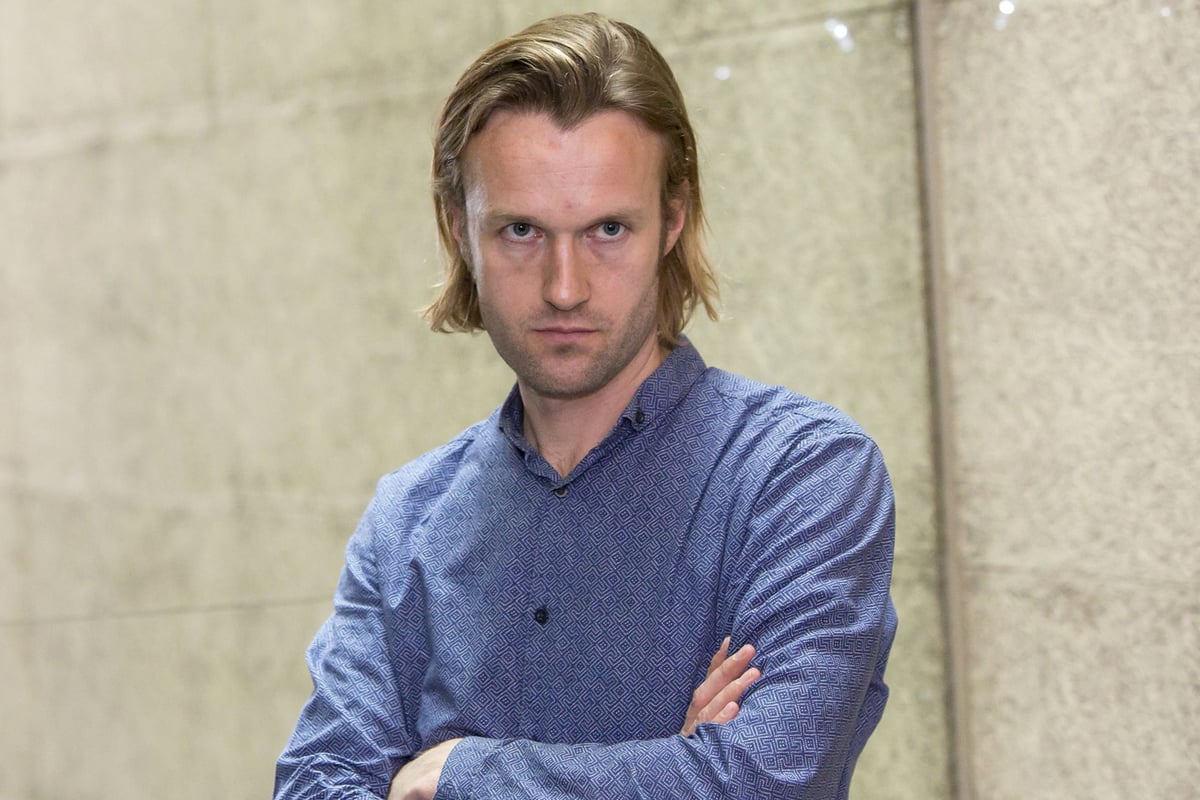
The grandson of Sergei Prokofiev today told how the composer would have been right behind a season of classical music rebooted to appeal to younger audiences.
Composer, producer and DJ Gabriel Prokofiev said his grandfather, whose works included the ballets Cinderella and Romeo and Juliet, would have supported “any project trying to bring music to new audiences.”
His grandson is one of more than 600 performers - including violinist Nicola Benedetti, Pulitzer-prize-winning John Luther Adams and electronic artist and pianist Megumi Masaki - bringing more than 60 short “taster” concerts to audiences at Sound Unbound festival at the Barbican.
The two-day event, parts of which will also be streamed across the world to millions by online broadcaster Boiler Room, will see music ranging from medieval to modern.
It aims to make classical music appeal to younger audiences by breaking with traditional etiquette by making it more like a music festival.
As well as cutting down the duration of concerts, audience members will be allowed to walk in and out of performances at their leisure as well as drink, take photos and tweet.
 Gabriel Prokofiev's grandfather, SergeiRex
Prokofiev, 40, whose new work for electronics and clarinet will have its world premiere at the festival where he is also curating a Nonclassical Clubnight, said: “I’m sure my grandfather if he was in the current musical landscape he’d be very supportive of these projects.
“He particularly put a lot of value on the communicative power of music and as a positive communal activity coming together for social good.
“I think he would be very supportive of any project trying to bring music to new audiences. He was very critical and anything that was below standard he wouldn’t be afraid to speak his mind. I think he would be pleased to see the quality of performers at Sound Unbound...
“He died just prior to the electric era so that would remain a mystery how he would accept that. I can’t see many people being negative about it.”
The musician, from Hackney, said the public have a “right” to access classical music. Adding: “A lot of people in the classical world don’t realise how big the audience is out there but needs to be presented in a less formal way.”
Read More
The festival, on October 31 and November 1, will take place across the Barbican Centre and surrounding venues including LSO St Luke’s, St Giles Cripplegate, The Pit, Milton Court Concert Hall and the Barbican Lakeside, highwalks and Conservatory.
Huw Humphreys, the Barbican’s head of music, said they hope to attract people who have never been to a classical concert to “take a risk” on classical music.
Electronic artist and pianist Masaki is putting on an experimental live performance of Nicole Lizée’s Hitchcock Études featuring clips from Psycho and The Birds.
Masaki, 52, who lives in Canada but used to be based in London, said the capital is the perfect venue for the festival because it is “where things are happening”.
She said: “London is the spot where without judgement artists can be free. Artists can moved forward, sideways, any direction...What the Sound Unbound festival embodies is that spirit, that energy, the facilities are also phenomenal. That atmosphere for us to connect with the audience.”
Other festival highlights include an overnight performance, Overnight Meditation, led by cellist Matthew Barley from 11pm to 6am, Benedetti playing Vivaldi’s Four Seasons, John Cage’s Child of Tree - a composed improvisation for cactus and pea pod shakers in the Barbican Conservatory - and “Quartet 360°” featuring Calder Quartet where the audience can listen to music by composers including Beethoven and Schubert in The Pit.
Mazdak Sanii, chief operating officer of Boiler Room, warned not to “type cast” younger audiences.
He said: “There’s definitely a danger in type-casting younger audiences as only being able to digest ephemeral three minute pop songs, whereas actually we know there’s a mass audience of young people with very sophisticated ears and who are really inquisitive about both new music and the roots of the music they care about.
“Ultimately I think the genre boundaries are no longer so distinct in any case: from conversations between traditional and electronic sounds in concerts by ensembles like the London Contemporary Orchestra, to artists like James Blake or Floating Points who are classically trained and incorporate harmonic complexity in their work that’s more usually associated with classical compositions, there’s a huge amount of cross-pollination.”