
The Standard's journalism is supported by our readers. When you purchase through links on our site, we may earn an affiliate commission.
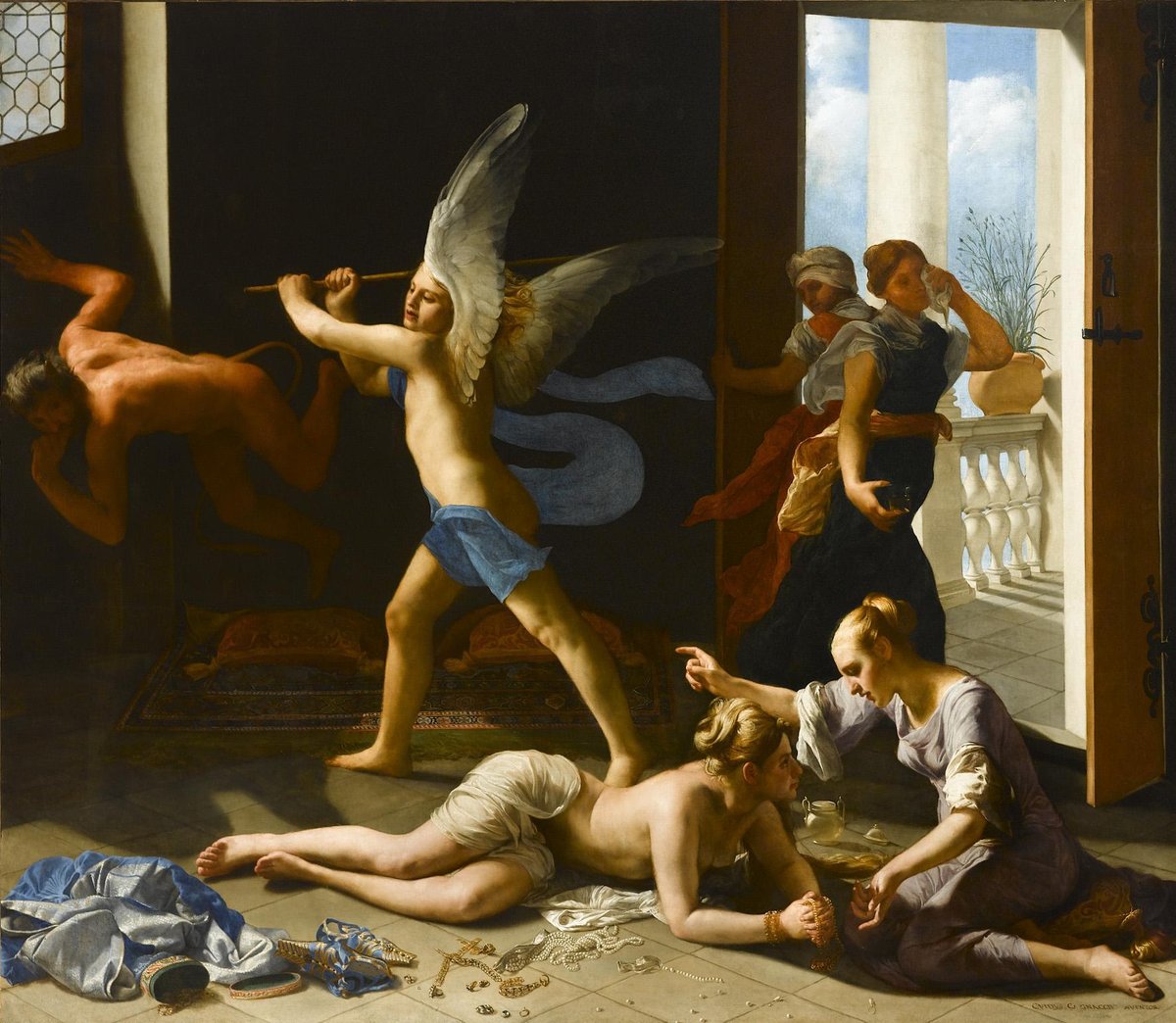
Evening Standard Arts In Association With Sensual: Mary sprawls before her sister Martha in The Repentant MagdaleneNorton Simon Art Foundation
Review at a glance
Guido Cagnacci was a Baroque maverick with a knack for disarming eroticism. The Repentant Magdalene (1660-63) is widely regarded as his masterpiece.
Little known here, Cagnacci lived a colourful life in Italy’s Emilia Romagna region, Venice and Vienna, including an elopement and unlawful shackings-up with women who were dressed as male assistants.
He’s best known for his startlingly carnal and naturalistic half-length nudes and there’s something of these figures in his depiction of Mary Magdalene, captured just as she’s torn off her clothes and renounced her sinful life, nude bar a loin cloth.
She’s discarded an opulent dress, fancy shoes and jewellery, including a torn string of pearls, scattered on the floor. She holds one last necklace like a rosary as she converses with her plainly dressed, virtuous sister Martha; Mary’s famous long hair stretches across the floor between them. Two maids flee the scene, one with a glass of unguent foretelling Mary’s later meeting with Christ.
Read More
Most striking is the prominence given to a winged Virtue chasing a tailed and horned Vice from the room. In a scene of typical Baroque chiaroscuro, the light falls heaviest on Virtue and Mary’s flesh: rarely have they been painted so sensually.
An awkwardness of composition makes dubious the curators’ contention that this is a one of the great Baroque masterpieces. But it’s a dramatic picture, and worth a visit.
Until May 21, National Gallery; nationalgallery.org.uk