
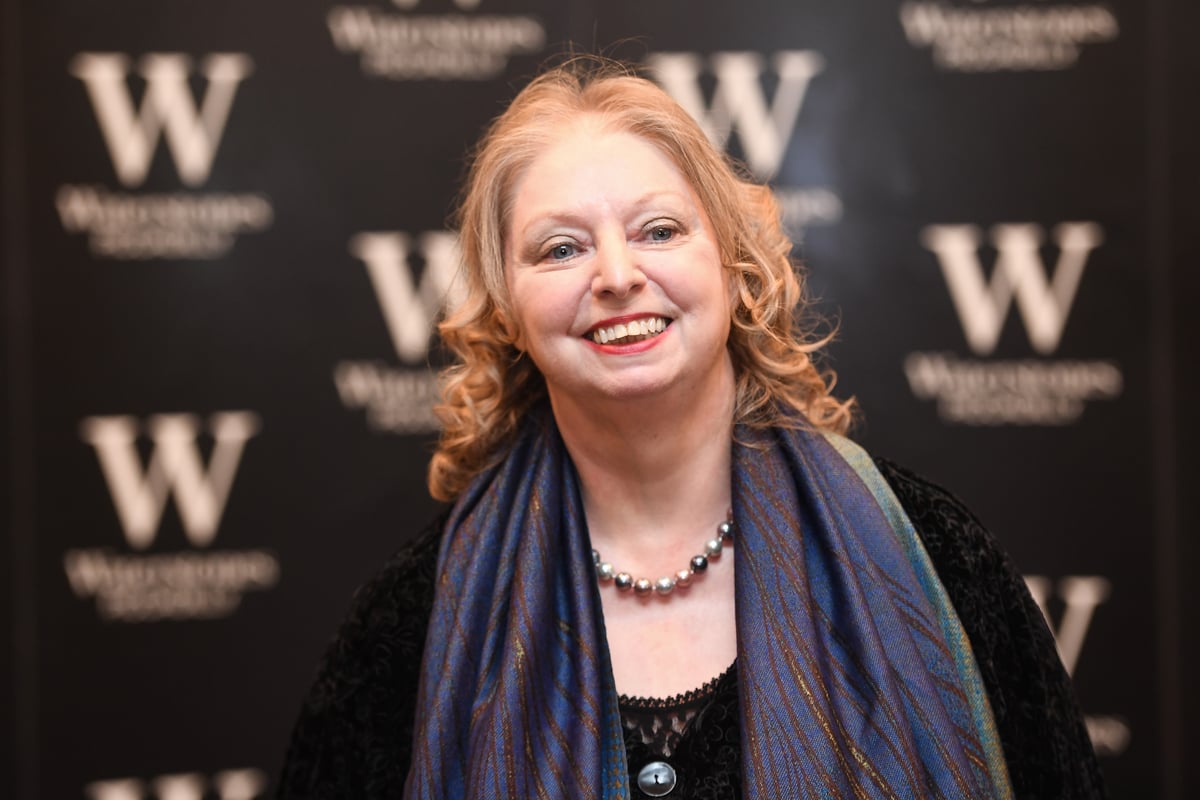
Dame Hilary Mantel, the acclaimed author who penned some of the UK’s most famous historical fiction books, has died aged 70.
She was born in Glossop, Derbyshire, the eldest of three children, graduated from Sheffield University with a Bachelor of Jurisprudence, and then published her first novel, Every Day is Mother’s Day, in 1985 when she was 33 years old. Shortly after, she became The Spectator’s film critic, before moving on to write novels full-time.
She was, in her own words, “seethingly ambitious”, and had always planned to become a barrister and then a politician. But health issues got in the way – she suffered from a severe form of endometriosis which continued to have repercussions throughout her life. When she was a student, doctors thought her pain was psychosomatic and so prescribed her what seems like an entire medicine cabinet of drugs, which duly led to a nervous breakdown.
Mantel once told the Times that she thought: “Well, better get a book up your sleeve because even if you’re sick you can write.” Her ambition never waned, however, and she was a notorious workaholic her entire life, sitting in the back of the car while her husband drove in silence so that she could continue writing.
She won the Booker Prize twice, once in 2009 for the novel Wolf Hall, and in 2012 for its sequel Bring Up the Bodies. Talking about her first win to the Guardian, she joked that she’d be spending her £50,000 winning on “sex, drugs and rock and roll,” before adding: “It buys time. That’s what an author wants”. In 2012 she said to the Times about winning the prize, “It’s been entirely positive for me. I just thought: oh, good, they’re giving me a big cheque!”
Although the Booker Prize was no doubt her most recognisable accolade, the author had won and been nominated for numerous awards before, including the Sunday Express Book of the Year award for 1992 novel A Place of Greater Safety and the Hawthornden Prize for 1996 novel An Experiment in Love.
She lived with her husband, geologist Gerald McEwen, almost her entire life. The couple married when she was just 20 years old. They divorced in 1981 but then remarried a year later and stayed together until her death.
They lived together in Botswana and then in Jeddah in Saudia Arabia for four years in the Eighties, an episode which Mantel wrote about it in the London Review of Books. In 2010 she penned an article in the Guardian where she said about leaving Jeddah, “In a moment, the constraint of four years eased, the extent of my inner impoverishment became plain” and that it was “the happiest day of my life”.
Never one to pull her punches, in an essay in the LRB in 2013, she wrote about the Royal Family, saying, “Kate Middleton, as she was, appeared to have been designed by a committee and built by craftsmen, with a perfect plastic smile and the spindles of her limbs hand-turned and gloss-varnished.
“When it was announced that Diana was to join the royal family, the Duke of Edinburgh is said to have given her his approval because she would ‘breed in some height’. Presumably Kate was designed to breed in some manners.”
Read More
Mantel also denounced the Catholic Church, saying to The Telegraph in May 2012, “I’m one of nature’s Protestants. I should never have been brought up as a Catholic. I think that nowadays the Catholic Church is not an institution for respectable people.”
In 2014 she was made a Dame, and in 2017 she was chosen to deliver the prestigious Reith Lectures on BBC Radio Four (other leading figures that have been chosen to present include Jonathan Sacks, Atul Gawande and Kwame Anthony Appiah).
If you are new to Mantel, or you have always wanted to read some of her novels but haven’t been sure where to start, here is our breakdown of her best works.
 Mantel was made a Dame in 2014. Here she holds her Dame Commander of the British Empire medal in 2015Getty Images
A Place of Greater Safety (1992)
A historical novel set during the French Revolution, this book focuses on the leaders of the revolution Georges Danton, Camille Desmoulins, and Maximilien Robespierre, tracking their lives from childhood up to the death of Georges Danton in 1794.
At the time, the New York Times said: “more novel and less history might not better suit this author’s unmistakable talent”.
A Change of Climate (1994)
Set in Norfolk in 1980, this book details Ralph and Anna Eldred whose lives start to break down when suppressed memories about a catastrophic event from their past start to surface.
The New York Times Review of Books said: “Some readers may find themselves re-examining their own ideas about the artist’s right or obligation to render politically uncomfortable truths. Others may elect not to consider any of this at all, and simply to enjoy Hilary Mantel’s smart, astringent and marvelously upsetting fiction”.
Eight Months on Ghazzah Street (1988)
The third of Mantel’s novels, Eight Months on Ghazzah Street tells the story of an Englishwoman who moves to Jeddah with her husband, inspired by Mantel’s own experiences.
The novel muses on the West’s relationship with Islam, and Mantel said in the Telegraph in 2009, “I felt a bit frustrated because as events developed, I had a sort of I-told-you-so feeling.”
The Spectator said that a “peculiar fear emanates from this narrative”.
Giving Up the Ghost (2003)
In 2003, Mantel published her memoir Giving Up the Ghost. Speaking to the Times in 2012 she said, “They say, ‘Never apologise, never explain,’ and I think if you’re a really strong person, that’s the philosophy that could guide your life. But I’m not like that, and I wanted to explain.”
Writing in the LRB she said: “You come to this place, mid-life. You don’t know how you got here, but suddenly you’re staring fifty in the face. When you turn and look back down the years, you glimpse the ghosts of other lives you might have led; all houses are haunted.”
She apparently started writing the memoir because her stepfather died and she had started making notes about objects as she went through his things, which stirred long-forgotten childhood memories.
“The story of my own childhood is a complicated sentence that I am always trying to finish, to finish and put behind me,” she wrote in the LRB.
Wolf Hall (2009)
The book that made Mantel well and truly famous, and won the author her first Booker Prize, Wolf Hall tracks the rise of Thomas Cromwell in Henry VIII’s court up until the execution of Sir Thomas More in 1535. It took Mantel five years to write.
In 2015 (along with its sequel Bringing Up Bodies) it was turned into a BBC period drama, which starred Damian Lewis as King Henry and Mark Rylance as Cromwell. The name of the book comes from the Wiltshire manor house that Jane Seymour grew up in.
The Observer said: “It is that supple movement between laughter and horror that makes this rich pageant of Tudor life her most humane and bewitching novel.”
The Times said: “As soon as I opened the book I was gripped. I read it almost non-stop. When I did have to put it down, I was full of regret the story was over, a regret I still feel.”
Bringing Up Bodies (2012)
Bring up the Bodies, which also won the Booker Prize continued Cromwell’s story, this time running up to Anne Boleyn’s execution, which happened in 1536 not so soon after the events of the first book.
The New York Times said: “The wonder of Ms. Mantel’s retelling is that she makes these events fresh and terrifying all over again.”
The Mirror and the Light (2020)
The third in the trilogy was finally released in 2020, and was longlisted for the Booker Prize but didn’t bring the author a hattrick of prizes. Writing in the Guardian, novelist Stephanie Merritt said: “It feels redundant to state that The Mirror and the Light is a masterpiece. With this trilogy, Mantel has redefined what the historical novel is capable of.” She added the three Cromwell works were “the greatest English novels of this century”.