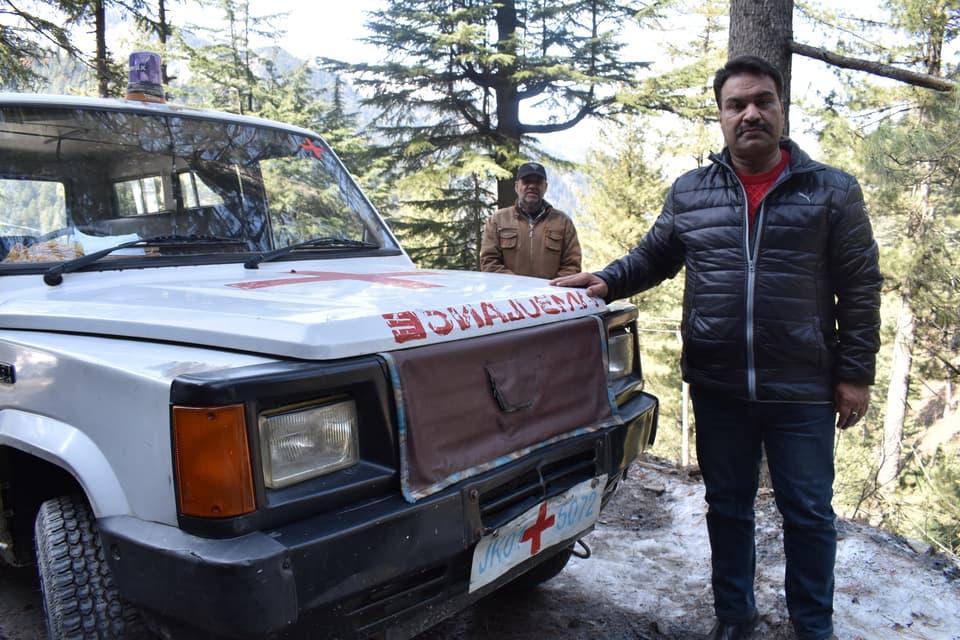
On Kashmir’s flashpoint border, frontline health workers fight Covid vaccination battles
Health workers are braving insecurity, hostile terrain, misinformation and distrust to reach far-flung communities with the vaccine. Aliya Bashir reports from Uri in Indian-administered Kashmir
ABOUT THIS PROJECT

She would hide.
The 35-year-old was expecting her seventh child when India’s vaccination campaign began early last year. Misinformation and conspiracy theories echoing around the jab had made her fearful.
“I never wanted to get vaccinated,” says Begum, who – with no mobile connectivity or internet in her village of Dudran - was cut off from reliable sources of information during the pandemic.
“All I had heard was that the vaccine is unsafe for young women and unmarried men,” she says, although there is no evidence linking infertility to the Covid-19 vaccine.
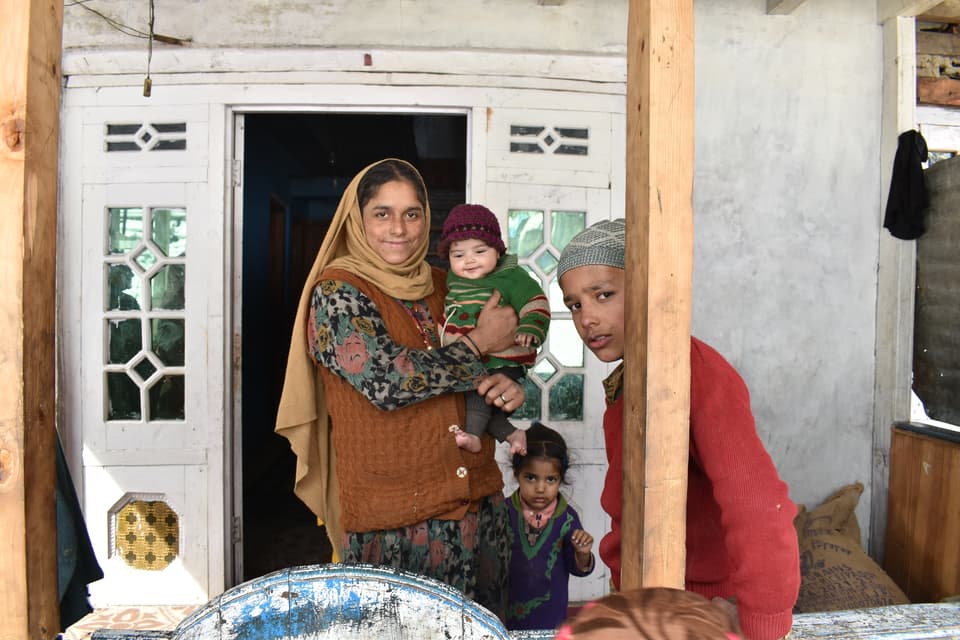
The village of Dudran sits high in snowy mountains close to the Line of Control, the flashpoint border that divides the Indian and Pakistani territories of Kashmir, where the armies of India and Pakistan frequently exchange shell fire. The region is considered to be one of the most militarised places on Earth.
In winter, the narrow roads leading to the village turn to treacherous, slippery slopes.
Health workers in border areas have battled against such challenges to reach far-flung communities with the vaccine, braving insecurity, hostile terrain, misinformation and distrust.
“Populations in hilly areas near the border do not have access to authentic information,” says Dr. Parvaiz Masoodi, Boniyar Block Medical Officer, on a tour of Dudran. “Information spreads by word of mouth and that makes locals susceptible to misinformation.”
Even when India’s healthcare system crumbled in the wake of the second coronavirus wave last year, medical staff in this border region said locals were still reluctant to be vaccinated.
“They initially felt that the virus will not reach them,” says Azmat Hameed, a Female Multipurpose Health Worker or FMPHW. “We were asked innumerable questions on myths and misconceptions about the vaccine,” says Hameed, who looks after vaccination storage at a primary healthcare centre in Boniyar.
“Women would bite their fingers and say they do not want beards to grow on their faces or have fertility issues after taking the vaccine.”
According to Kashmir’s health department, there was an exponential surge in Covid positive cases early this year in the region with a daily record of 1,695 cases during the peak of the recent wave.
To encourage vaccine uptake, the health teams devised a strategy of going door-to-door to offer vaccinations. “There were so many instances when women would not open their doors,” says Tabasum Bashir, a young health volunteer.
Instead, women would scream that someone was coming to kill them with the vaccines, she says.
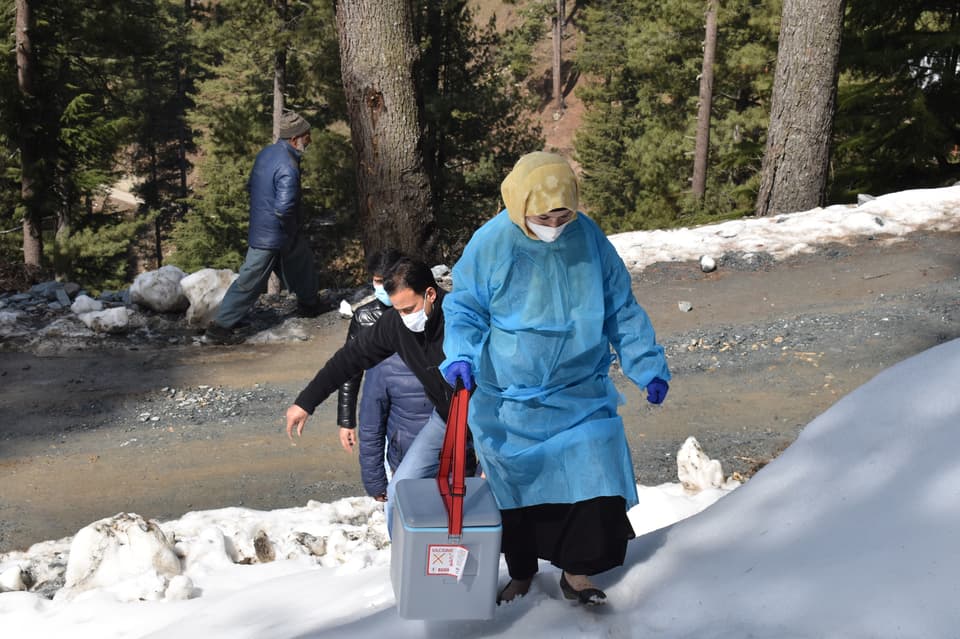
Bashir Ahmed Sofi, an official at Boniyar’s primary healthcare centre, narrowly escaped death after getting Covid. He was on ventilator for several days. Dozens of his colleagues got infected multiple times. Surviving Covid, he was determined to spread the word about the vaccine.
He convinced his sister, a cancer patient, to get jabbed. Others in his family followed.
“Vaccine hesitancy was mostly among women,” he says. “So it was our female staff that won their confidence and that of their communities.”