
Covid spurs Africa’s burgeoning vaccine manufacturing industry
South African-born biotech billionaire Patrick Soon-Shiong has launched a new facility in Cape Town to make Covid vaccines based on cancer therapy technology
ABOUT THIS PROJECT

South African-born biotech billionaire Patrick Soon-Shiong has pledged £146 million ($195 million) to the NantSA Vaccine Manufacturing Campus that aims to produce “second generation” vaccines based on cancer therapy technology.
The aim is to produce a universal booster that targets the nucleocapsid protein at the core of the coronavirus, which is less prone to mutation than the spike proteins targeted by other shots.
The facility, which will be the largest of its kind in Africa, will also work on vaccines for other diseases that plague the continent, such as HIV and tuberculosis.

So far, about 10 billion doses of Covid-19 jabs have been administered worldwide, but fewer than one in 10 African adults have received two doses –– making Africa the least vaccinated continent. The main reason is lack of access to vaccines, after wealthier countries bought up the bulk of initial supplies.
The inequity exposed by Covid-19 has spurred efforts in Africa to fight this pandemic and to prepare for future disease outbreaks: “Africa should no longer be last in line to access vaccines against pandemics,” South African President Cyril Ramaphosa said at the NantSA launch.
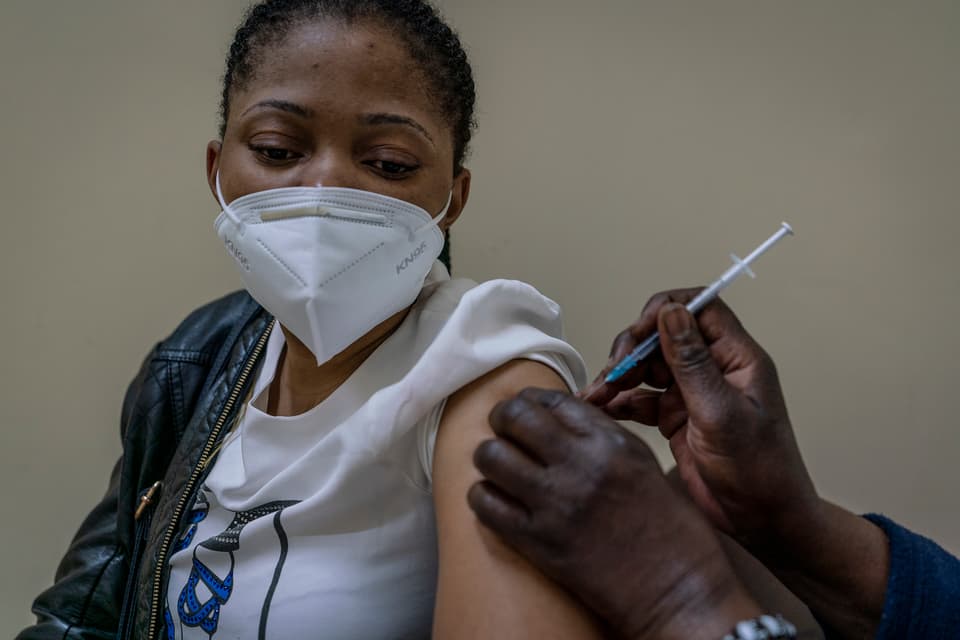
Through the African Union, the continent has acquired more than 500 million vaccine doses, but that is only about half of what countries need to meet the World Health Organisation’s target of a 70 per cent vaccinated population, Ramaphosa said. “We need more vaccine doses, we need better therapeutics, and we need to protect the people of our continent against future variants and future pandemics.”
Africa currently produces only about 1 per cent of the vaccines used on the continent, and that capability is confined to just five nations –– Egypt, Ethiopia, Senegal, South Africa, and Tunisia–– on a continent of 55 countries.
Numerous initiatives on the continent are working to ensure that African countries will be better prepared for the next pandemic and to combat current threats.
“Covid was the catalyst,” says Nicaise Ndembi, chief science advisor at the Africa Centres for Disease Control and Prevention (Africa CDC).
In December, the African Union established its Partnerships for African Vaccine Manufacturing, which seeks to ensure that by 2040, 60 per cent of all vaccines used on the continent are produced in Africa. To meet this target, experts estimate that the continent would have to produce between 1.5- and 1.7-billion doses a year.

South African scientists have been at the forefront of combating the pandemic with advanced genomic surveillance and were the first to detect both the Beta and Omicron variants.
But even South Africa, with its advanced infrastructure, relies on importing the active components of vaccines from other countries.
South Africa’s Biovac Institute has struck a deal with Pfizer and BioNTech to manufacture 100 million doses a year of their Covid-19 vaccine for the African market.