
Angola’s Covid vaccine one-stop shops - a model for Africa’s rollout?
Counsellors are on hand to answer questions and calm nerves
ABOUT THIS PROJECT

As well as drawing on lessons learnt during the spread of yellow fever in 2017, Angola has invested in cold-chain technology, digital pre-registration systems for high-risk groups and specially-trained counsellors to counter vaccine hesitancy.
Piecing together these components in dedicated one-stop shops has helped to ensure a smooth and efficient roll-out, according to Dr Djamila Cabral, the World Health Organisation’s representative in Angola.
“It is the commitment and engagement by the Ministry of Health to work on the small pieces that form the vaccination process which contribute to its success,” she said.
“We had to strategise so that all these components, such as registration, vaccine storage, waste management, recovery, and counselling could be done in one location safely.”
In the capital city of Luanda, a bustling shopping mall has been transformed into one of these mass vaccination stations. With the capacity to deliver over 5,000 jabs a day, the Paz Flor mall is just one of 21 major hubs across the country.
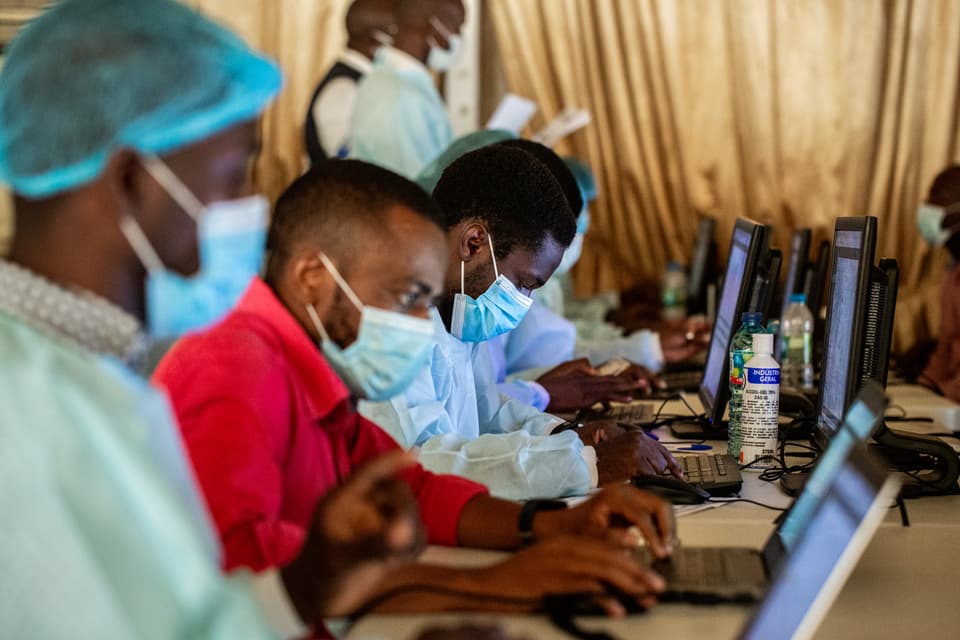
What sets Angola’s vaccination effort apart from other African countries is a collaboration with the youth organisation Jucarente, which has trained over 90 volunteers as counsellors and community mobilisers to help in the rollout.
Some are stationed in the recovery area at the vaccination centres, creating an atmosphere of calm authority by answering queries about the normal side effects of the jab.
Dr Djamila witnessed this in action: “Everybody at the centre was silent, paying attention to the counsellor”.

The entire process, from arriving at the vaccination centre to recovering post jab, takes only 20 minutes. The streamlined operation is a result of constant evaluation and fine-tuning.
Armed with protective gear and a positive attitude, these counsellors also go door-to-door to help persuade people to get jabbed.
One of the counsellors, Maria da Purificação Bache Ngoio, a 24-year-old International Relations student, described the scepticism and even hostility around the vaccine that she has encountered.
“Some people say offensive things when they open their door, but we continue to be strong and have love and humanity to help people protect themselves,” she said. “I just want people to be safe.”
In areas with limited internet access and low literacy rates, the work of these community mobilisers and counsellors is crucial.
Across Africa, vaccine hesitancy fuelled by misinformation is an obstacle.
“There is a lot of hesitancy, sometimes in people that you don’t expect. I know people who are not ashamed to come to me and say ‘I don’t want the vaccine,’” said Dr Djamila.

