In Morocco’s Atlas mountains, education opens new horizons for girls
The transformative project offers girls an alternative to early marriage and the prospect of new futures beyond the mountains
ABOUT THIS PROJECT

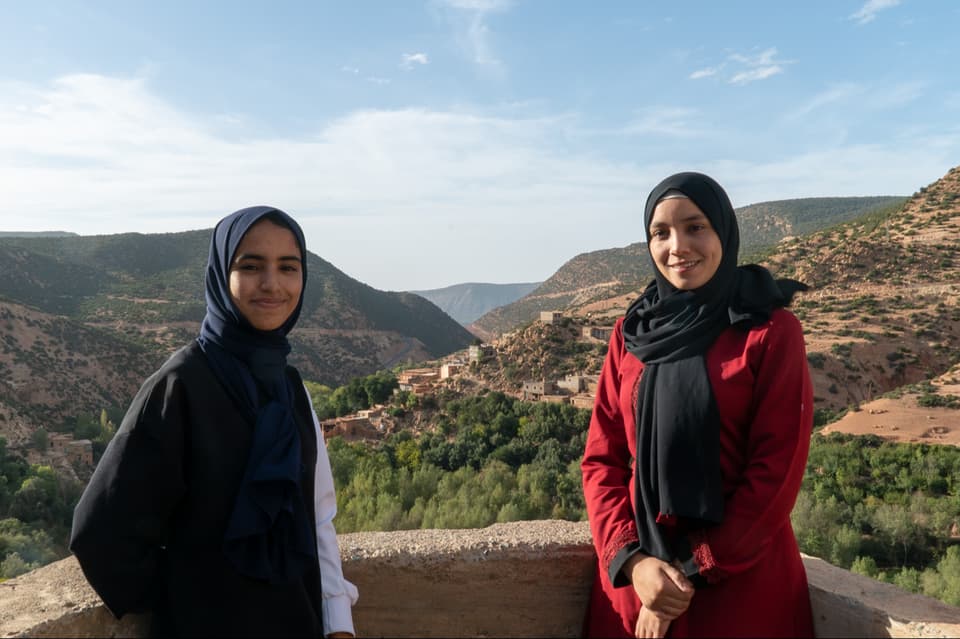
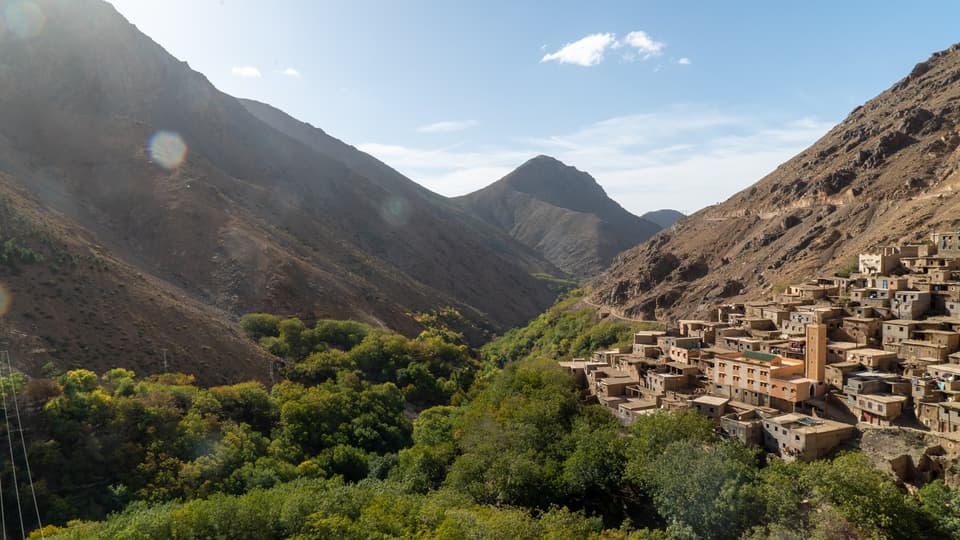
The snow-capped peaks of Morocco’s Atlas mountains are a dazzling backdrop to 17-year-old Loubna’s short walk to school, but the same breath-taking terrain and the traditions of her community could have confined her to a very different life.
By her age, Loubna’s mother - who had no schooling at all - was already married and pregnant.
That was Loubna’s destiny too: an education beyond primary school was out of reach in her village of Imska, where simple brick homes perch on the precipitous slopes of the High Atlas.
She’s in her last year of the Lycée, one of the brightest in her class, and hopes to go on to university.
Loubna says her mother, who also has three younger daughters, is her greatest supporter: “She told me ‘you know, when I was younger, like you, I was married and I was pregnant with you. But you have the chance to have a bigger life’. My mother, she just got married, that was it. She wants us to be better than her.”
Education for All (EFA) was set up in 2007 to give girls living in the most remote villages in the Atlas Mountains the chance to go to secondary school. The long journey to the valley town of Asni is considered too risky for girls and a fragmented school day means that students can be out on the street for long spells. The subtext: girls may fall into “bad ways” and end up pregnant, the ultimate shame for both them and their families.
So parents believed it was safer for girls to leave school after the primary years, stay at home and help in the house, a pattern that has been the cultural norm among rural Berber families for generations.
Although rates of school attendance have grown strongly in the last 20 years, only 39 percent of girls in rural Morocco are enrolled in secondary school. If a girl stays at home, she is often married off even before she starts her periods, and sometimes to a much older man.
“I would be married now because if you stay at home you wait one or two years and they will tell you that you should get married, like all the other girls. It’s obligatory,” says Loubna’s classmate, Wafaa.
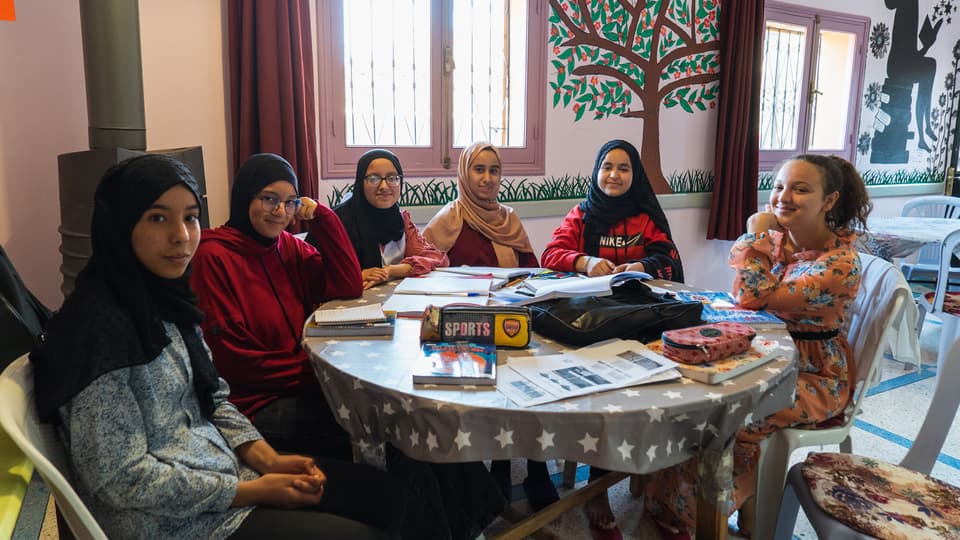
EFA’s concept is simple: the charity provides safe, homely boarding houses next to schools, each one managed by a house mother, with spaces to study and relax, cosy dorms and three nutritious meals a day.
Latifa Aliza, 42, the ebullient house mother to three dozen of the younger girls, says the charity has changed attitudes among families. “They think girls are here in life to be a housewife, to get married. But with this project we have started to change the mentality of these girls’ parents, to let them go to school.”
The impact has been life-transforming. So far, nearly 600 girls have passed through EFA’s doors, staying for the full six years of Morocco’s secondary school curriculum. More than 90 per cent passed the challenging Baccalaureate final exams this year and over 170 girls have gone on to university.
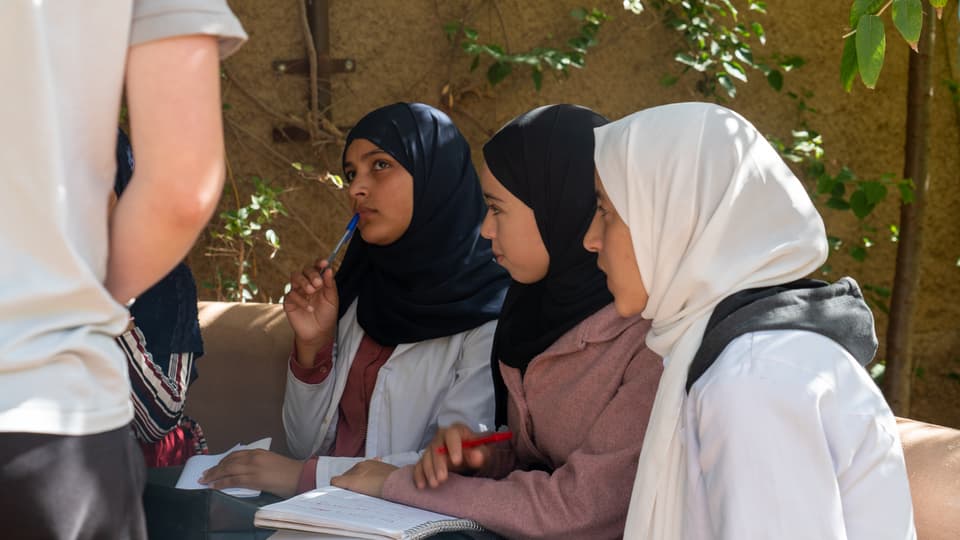
On a bright, late October afternoon, Loubna comes home from school to her boarding house for 16 to 18 year-olds. She’s come from her PE assessment and she’s still out of breath as she strides through a courtyard garden planted with pomegranate, apricot and lemon trees.
She takes off her shoes and greets her house mother Khadija in an elaborate ritual, gently banging cheeks three times on one side, five on the other. “We had to run six times round the track. I came first!” Loubna says proudly. She’s wearing a tracksuit bottoms and a hoodie, her hair covered in a cotton headscarf. All the girls are stylish in sweatshirts and leggings, long flowery dresses nipped in with belts or flowing, pleated skirts. For school they don a white lab coat, the standard uniform in Moroccan schools.
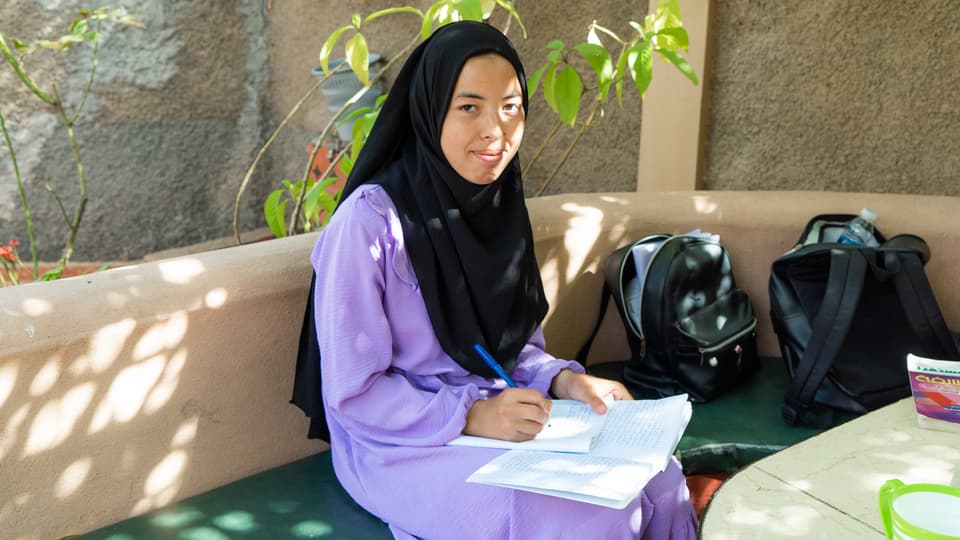
The girls work hard. When they are not at school they study in the library, the computer room or under the shade of vines in the garden. Vivianna, a Dutch volunteer in her early 20s, is leading an English lesson for a small group of girls.