King Charles has accepted the Government’s advice to grant Ruth Ellis, the last woman to be executed in the United Kingdom, a conditional pardon.
Deputy Prime Minister David Lammy announced the move on Wednesday.
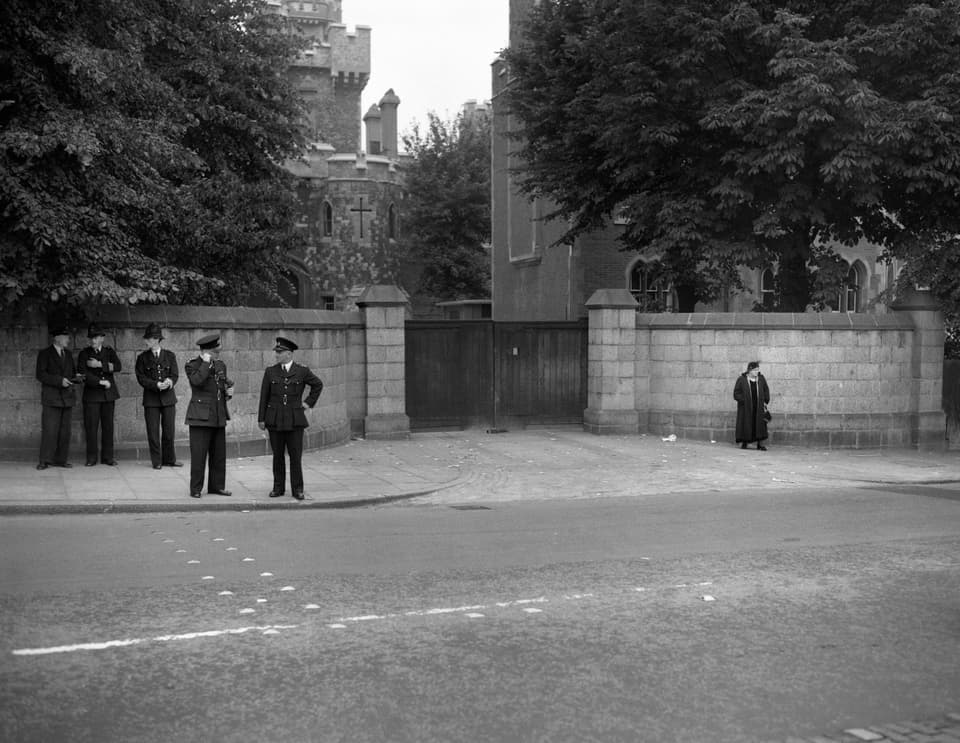
Nightclub hostess Ellis was hanged at London’s Holloway Prison on July 13, 1955, after being convicted of murdering her lover David Blakley.
Mr Lammy told the Commons: “I have the honour to say that His Majesty the King has accepted our advice to grant Ruth Ellis a conditional pardon, the last woman to be hanged in the United Kingdom.
“While the pardon does not claim she was innocent of killing David Blakely, it replaces the death penalty with a sentence of life imprisonment to recognise a profound injustice in this exceptional case.”

Ellis shot Mr Blakley outside The Magdala pub in Hampstead following a turbulent relationship.
Her case became notorious over the years given its circumstances.
When Ellis appeared at the Old Bailey in Court Number One on 20 June 1955, the prosecution put one question to her: "When you fired the revolver at close range into the body of David Blakely, what did you intend to do?"
She responded: "It's obvious when I shot him I intended to kill him."
These words sealed her fate, leading the jury to take just 20 minutes to find her guilty of murder, and a mandatory death sentence.
“She was telling the truth...unfortunately the truth for her was fatal,” Mr Justice Havers later recalled.
Her family, who have previously called for a posthumous pardon saying Ellis had been physically and emotionally abused by her partner, said on Wednesday that “justice has finally been done”.
Her grand-daughter Laura Enston stressed in a statement: “This pardon does not undo what happened 71 years ago. It does not restore the lives that were broken – the children left behind, the years lost.
“But it says, formally and finally, that Ruth should not have been executed; that the justice system failed her. That acknowledgement matters profoundly to our family.”
Ms Enston added: “Ruth was a victim of sustained and brutal abuse. Her children – our mother and uncle – never recovered.
Read More


“My uncle took his own life; my mother’s trauma left her unable to be the parent we needed.
“The shadow of Ruth’s execution has fallen across two generations. We have carried shame that was never ours to bear.”
Under modern law, it is possible that Ellis could have argued the partial defences of loss of control or diminished responsibility applied to her.
These defences might have reduced her conviction from murder to manslaughter, and could have been considered by a jury had the case been heard today, according to the Ministry of Justice.
Ms Enston praised Deputy Prime Minister Mr Lammy for “having the courage to act” on the case.
“We hope Ruth’s story serves as a lasting reminder that the justice system must reckon with the abuse that drives women to the edge – and must never be afraid to acknowledge when it has got things wrong,” she said.

The Royal Prerogative of Mercy is one of the historic prerogative powers of the Crown and is exercised by the King on ministerial advice.
A conditional pardon does not affect the conviction itself but substitutes the sentence imposed by the court with a lesser penalty.
Catherine Atkinson, minister for victims and tackling violence against women and girls, said: “For seventy years, Ruth Ellis’s family have carried the weight of what happened to her.
“Today we recognise the exceptional circumstances surrounding her case and the impact they had on her life.”
The application for a pardon was submitted by four of Ellis’s grandchildren.