Inside London’s great affordable homes betrayal
When she moved to London a year ago Sorcha Ní Chonghaile was shocked by how competitive and expensive finding a room in a shared flat was. Since then things have only got worse. “Rents have skyrocketed,” she says.
Exorbitant rents are a capital-wide issue but Ní Chonghaile lives in Rotherhithe, close to the school she teaches at, and pressure there is especially high because it is on the doorstep of the monster, £4 billion Canada Water development, which will replace a 53-acre swathe of shopping centre, car parks and warehouses with a new town centre plus thousands of homes. “There is investment into the area, which is great, but because of it rents are going up, and local people aren’t seeing any benefit,” says Ní Chonghaile.
Michael Robertson lives in Canada Water with his partner and their teenage son and like all parents he worries about his child’s future. Not a day passes when he doesn’t think about how the 13-year-old’s life will pan out, and specifically whether he will ever be able to afford a home of his own.
“It is always on my mind — will he be able to live locally? Will he be a 30-year-old man living with his parents?” he says.
When the Canada Water plan was unveiled in 2018 Robertson was cautiously optimistic. “I was never anti-regeneration or anti-gentrification,” he says.
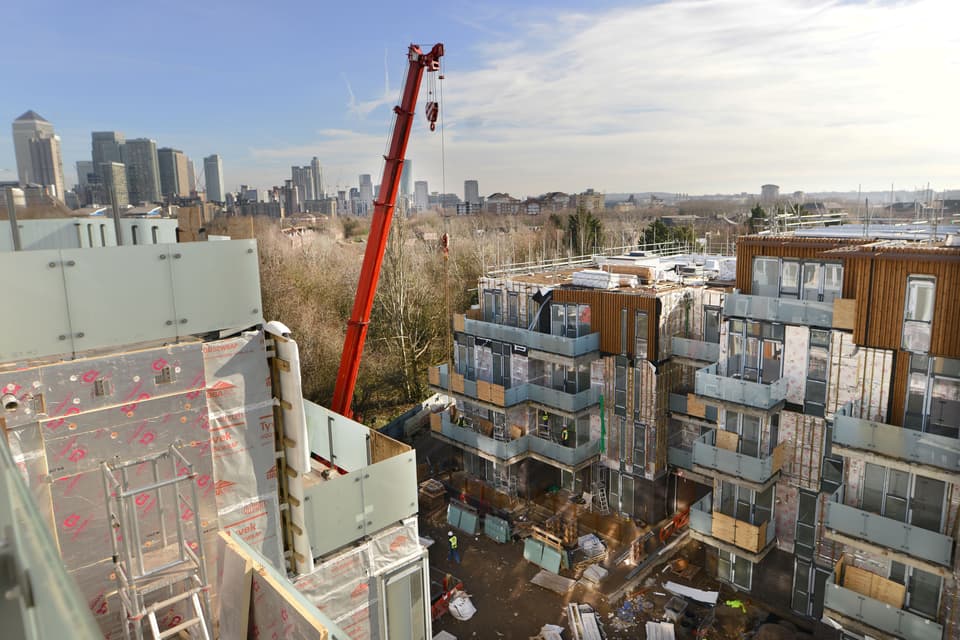
And he thought the initial pledge that 35 per cent of the up to 4,184 new homes planned for the site would be earmarked for renters and would-be buyers who had been priced out of the market was “fantastic”. Unfortunately, most of those affordable properties will never be built.
British Land, which reported an underlying profit of £279m in 2025, has managed to successfully renegotiate the deal, claiming rising costs made its original ideas financially unviable. It initially wanted to slash the number of affordable homes on the site to three per cent, but agreed to deliver nine per cent (around 380 homes) after the GLA stumped up a grant of up to £37.5m.
That is still a net loss of more than 1,000 affordable homes.
This kind of horse trading is completely normal in London’s hard-pressed house building industry. In a world where construction costs have increased since the pandemic, and developers have to finance new fire safety standards introduced after the Grenfell Tower tragedy, affordable housing is, apparently, an expendable luxury.
A spokesman for British Land said that the landscape had changed since the original Canada Water Masterplan was agreed in 2020. With higher costs it had no choice but to cut the amount of affordable housing on the site. “All social rented homes will be provided in accordance with Southwark Council nomination requirements,” he said. “There will be a local lettings plan for any intermediate homes, ensuring that local residents are first to access new affordable homes.”
With higher costs it had no choice but to cut the amount of affordable housing on the site
As a key worker it is possible that Ní Chonghaile might qualify for one of these homes, although she will have to get in the queue. There are currently more than 22,000 households on Southwark Council’s housing waiting list.
Read More


She hopes to hang on in the area, but if rents continue to rise she knows she might be priced out. Her £1,100-a-month rent already eats up around a third of her take-home pay, not including bills.
Even if she teams up with a friend, buying seems like a distant hope. “In reality I think that I will be pushed out of Zone 2,” she says. “It is frustrating, but it is something I will have to come to terms with.”
London’s councils, under pressure to deliver more housing, tend to side with developers wanting to cut affordable housing — many appear to take the view that a little bit of affordable housing is better than nothing.
At Morden Wharf, developer Galliard Homes initially pledged that 35 per cent of the 1,500 homes to be built on the Greenwich Peninsula site would be affordable when the project was approved in 2022. In April it negotiated that be reduced to 20 per cent, a loss of some 225 affordable homes.

Meanwhile, on the Isle of Dogs, the redevelopment of the defunct Westferry Printworks has also had an affordable trim. When developer Northern & Shell won planning permission last year, 475 of the 1,358 homes planned for the site were to be affordable — about 35 per cent. At the start of the year this was slashed to 10 per cent.
Jerry Flynn first discovered how dispensable affordable housing can be during the redevelopment of the Heygate Estate in Elephant and Castle, where he was born and raised and where the proportion of affordable homes offered on the rebooted site was reduced from 35 to 25 per cent. “Undoubtedly there are now extra costs for developers,” says Flynn, 70, a retired teacher. “But I don’t see why it should all be shoved on our shoulders rather than the developer meeting the costs out of their profits.
“Whatever its present justification, the consequences will last longer — the affordable housing we lose now will never be recovered.”
“The affordable housing we lose now will never be recovered”
Jerry Flynn
The Government’s response to the crisis is not to take steps to ensure developers don’t renege on their affordable housing responsibilities. In fact, last year, it announced that developers offering 20 per cent affordable housing can use a special fast-track planning status, down from 35 per cent. Steve Reed, the housing secretary, said it was crucial to cut targets “to get spades in the ground” when the policy was announced in October.
However, data from building analyst Molior shows little sign of a reinvigorated market. Work began on 2,103 homes in the first quarter of this year — a fraction of the Mayor’s building target of 88,000 new homes per year. Meanwhile, of the 2,838 new homes which were sold in the first three months of 2026, found Molior, only 600 were sold to UK buyers. The majority were sold overseas or to be rented out.
And it is not that local demand isn’t there. London Councils estimates that 210,000 Londoners are currently homeless and living in temporary accommodation. Many more are stuck at home, in overcrowded homes, or are only just managing to pay their rent or mortgage.
“What is the solution? Well, we can’t depend on the free market for the homes we need,” says Flynn. “We need the Government to provide the funds to build housing, council housing.”

Back at Canada Water work has already started on the regeneration, which will feature shops, offices, leisure facilities, a town square and a public park. A clutch of restaurants and a new leisure centre, bringing padel to SE16, have already opened. The first private apartment building was completed in December. Prices at The Founding start at £564,000 for a 498 sq ft studio, and there are three-bedroom flats on sale for £1.5m. British Land would not confirm how many have so far been sold.
Robertson, 57, who works in the planning department of a London council, is painfully aware of how desperately affordable housing is needed in Southwark.
“High mortgage rates and rents mean that people are trapped living with their families, or in multi-occupancy flats sharing two to a room, or staying in relationships they don’t want to be in because they can’t afford to leave,” he says.
Many of Robertson’s friends and neighbours have taken an exit strategy and left London, which makes him sad.
“What I am seeing is a dissolving of local communities because people can’t afford to live,” he says. “I worry about London, that it is becoming a playground for the rich. It should be for everybody.”